

Inspired by the Design for Freedom Pilot Program
Link: Humanscale’s Official Design for Freedom Case Study
Learn more about The Sheward Partnership’s approach in participating in our first Design for Freedom Pilot Project below.
Introduction to Design for Freedom
The Humanscale Chicago showroom achieved Living Building Challenge Petal certification in 2026. In addition to this ambitious achievement, Humanscale engaged The Sheward Partnership to participate in the Design for Freedom Pilot Program, administered by Grace Farms.
Grace Farms is a cultural and humanitarian center in New Canaan, Connecticut, designed by SANAA and set within 80 acres of natural landscape, bringing together nature, arts, justice, community, and faith. Design for Freedom, launched by Grace Farms in 2020, is a global movement working to eliminate forced and child labor from the building-materials supply chain by promoting material transparency, ethical procurement, and more equitable practices across the architecture, engineering, and construction industries.
Grace Farms just recently published the official Humanscale Chicago Design for Freedom case study on their website. If you’re interested to learn more, follow along below for a summary of TSP’s approach in researching equitable supply chains in the built environment.
Introduction to Humanscale
Humanscale is the world leader in ergonomic furniture solutions, including chairs, sit-stand solutions, task lights, and other work tools. Humanscale’s headquarters is in New York City, their main manufacturing facility is located in Piscataway, New Jersey, and they have showrooms across the globe. Humanscale is guided by the core philosophy that good design achieves more with less, which can also be seen in their corporate sustainability policy. Humanscale promotes a net positive approach, which gives back more resources than it draws from the Earth. Humanscale’s product line features Living Products, a certification that establishes the highest standard in responsible manufacturing. Additionally, Humanscale offers third-party verified Declare labels and Health Product Declarations to disclose material ingredients while simultaneously and systematically removing harmful chemicals from their product line. Products undergo third-party testing to verify low- to no-emission of volatile organic compounds (VOCs). Lastly, Humanscale is B Corp certified, demonstrating their corporate commitment to sustainability and human rights. In order to achieve these ambitious goals, Humanscale partnered with their supply chain network and required sustainable practices, human rights policies, and advanced green chemistry. While incrementally expanding environmental stewardship goals, Humanscale recognized that the next logical step was to evaluate human rights policies and used Design for Freedom as a framework for understanding current practices and identifying areas for improvement.
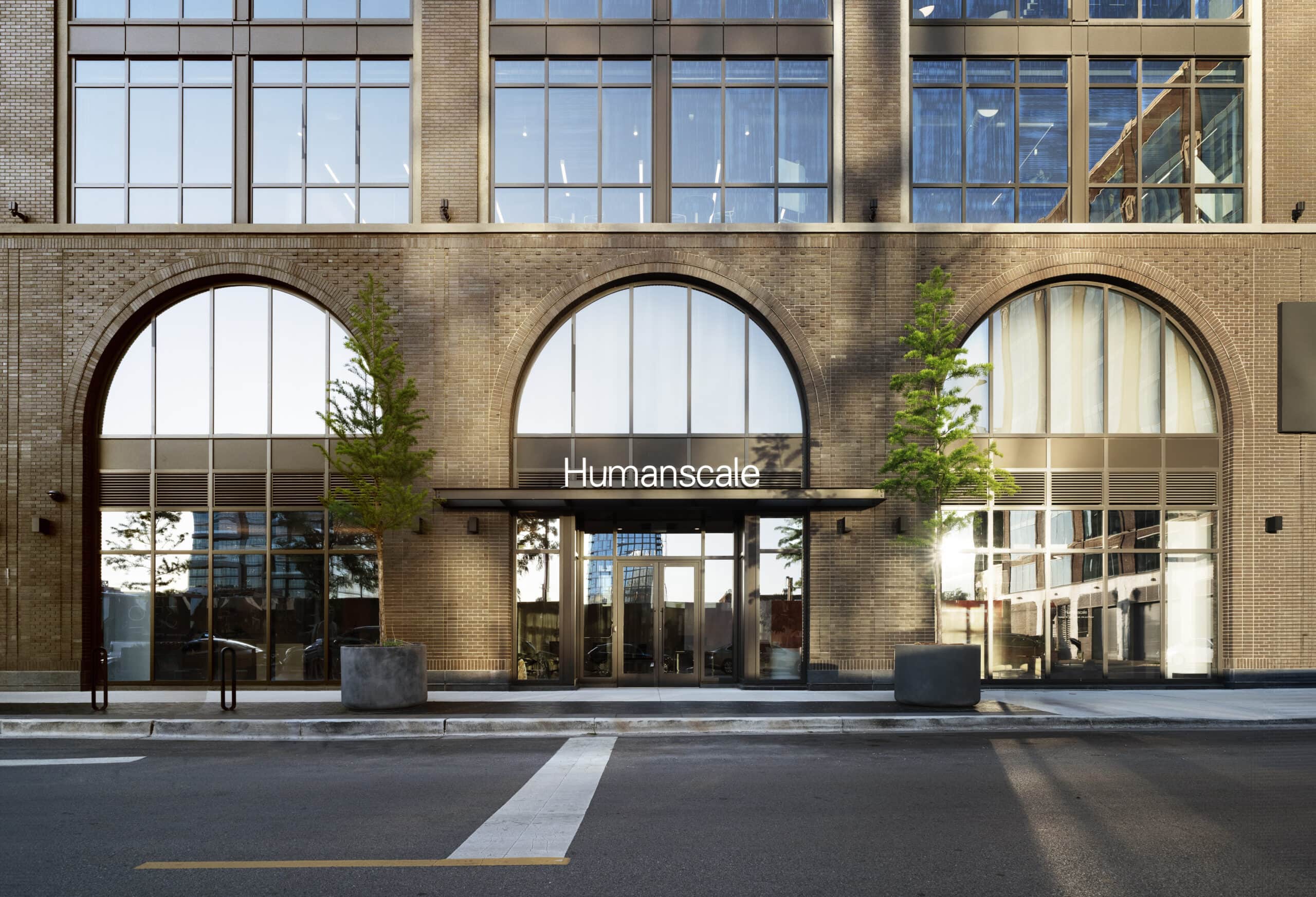
The Chicago Showroom
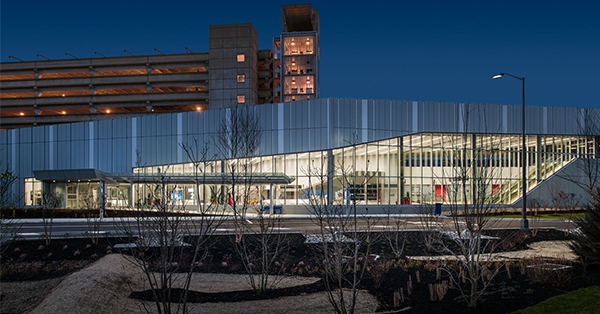
The Chicago showroom sets a new standard not only in Humanscale’s global portfolio, but also for the industry at large. This is the brand’s first project to display their product in a first floor retail space open to the general public. The 4,000 square foot interior fit-out is a flagship showroom that hosts over 10,000 visitors as part of the NeoCon and Fulton Market Design Days conferences in Chicago each year. Humanscale uses the space to host team member trainings, including over 50 people for educational content and events. This is also Humanscale’s first project to achieve Living Building Challenge Petal certification including the Materials and Health + Happiness Petals. The project opened and completed its Ready Audit in 2024 and verified 12-months of energy and water data to demonstrate superior performance in 2026. The Living Building Challenge certification demonstrates Humanscale’s commitment to sustainable spaces that enhance occupant health and well-being. The certification process features over 21 Humanscale products that directly contribute to the Materials calculations. Lastly, this project participated in the Grace Farms Design for Freedom Pilot program. The Living Building Challenge certification served as a framework to select the most sustainable and transparent materials available on the marketplace today. Much of the certification process requires engaged conversations with manufacturers to advocate for healthier materials and enhance transparency in the supply chain, so Design for Freedom easily fits in the materials vetting process. The two programs worked together to enhance material selection and ensure that the Design Team selected, invested, and rewarded materials redefining the industry in responsible and ethical manufacturing processes.
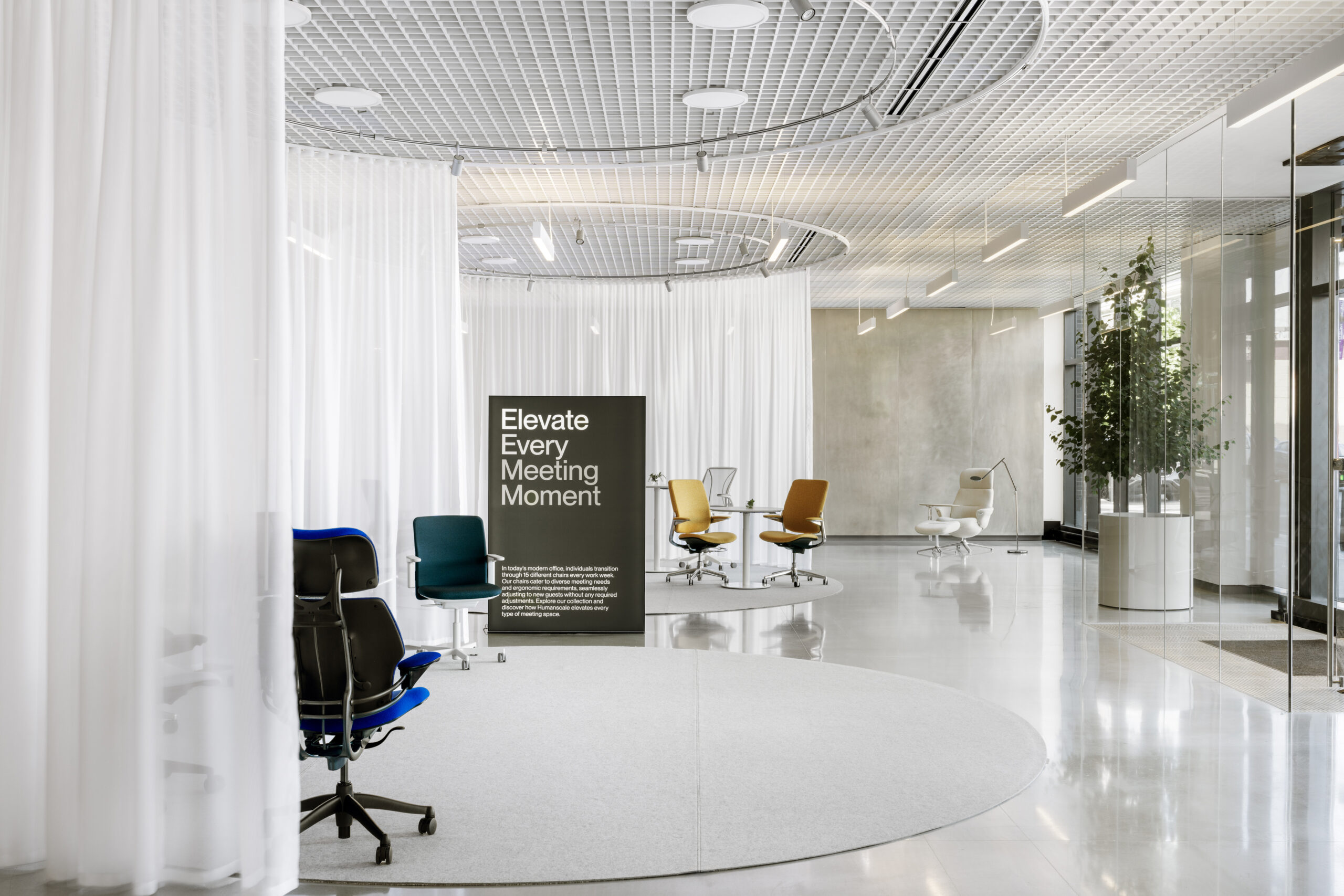
Project Overview
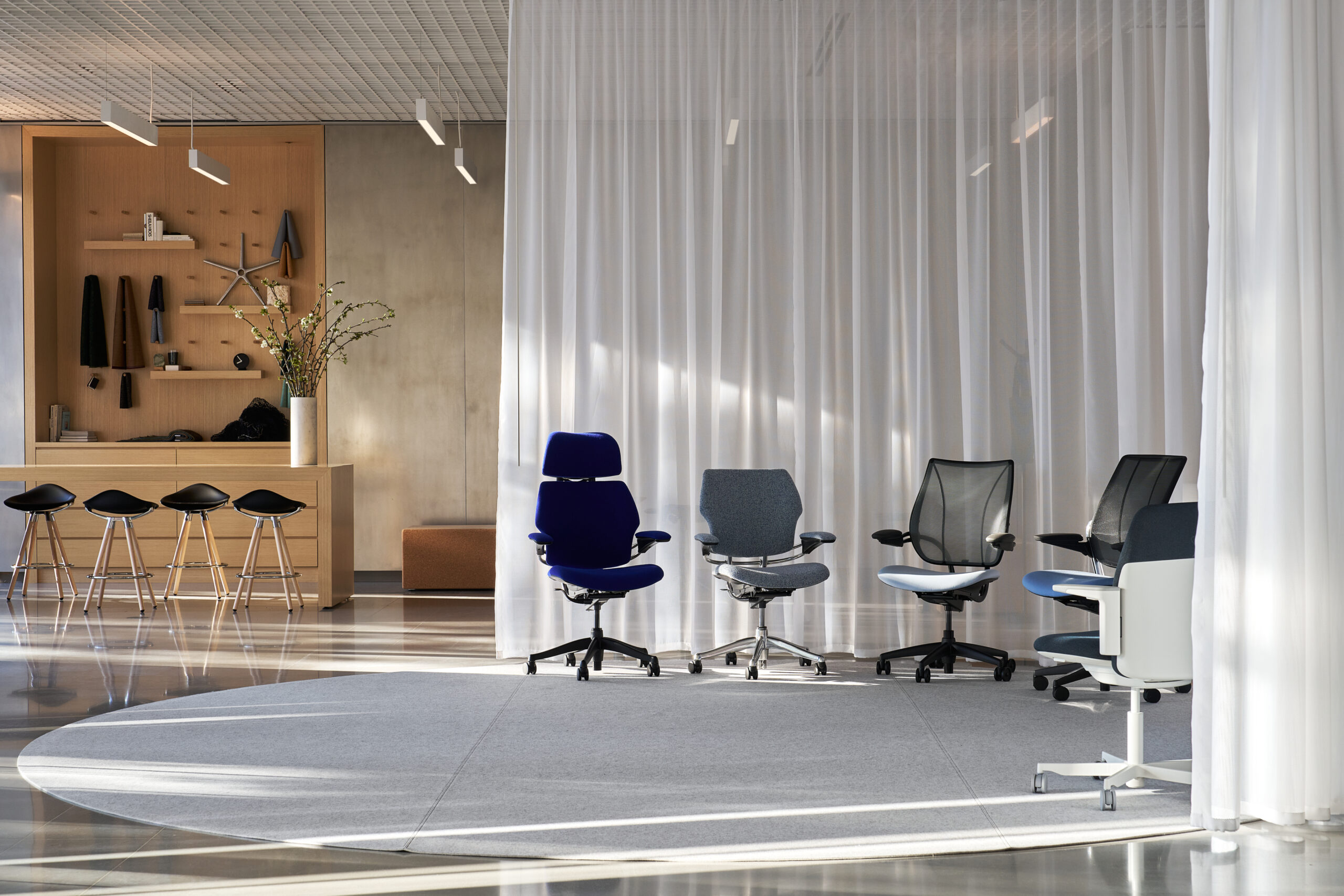
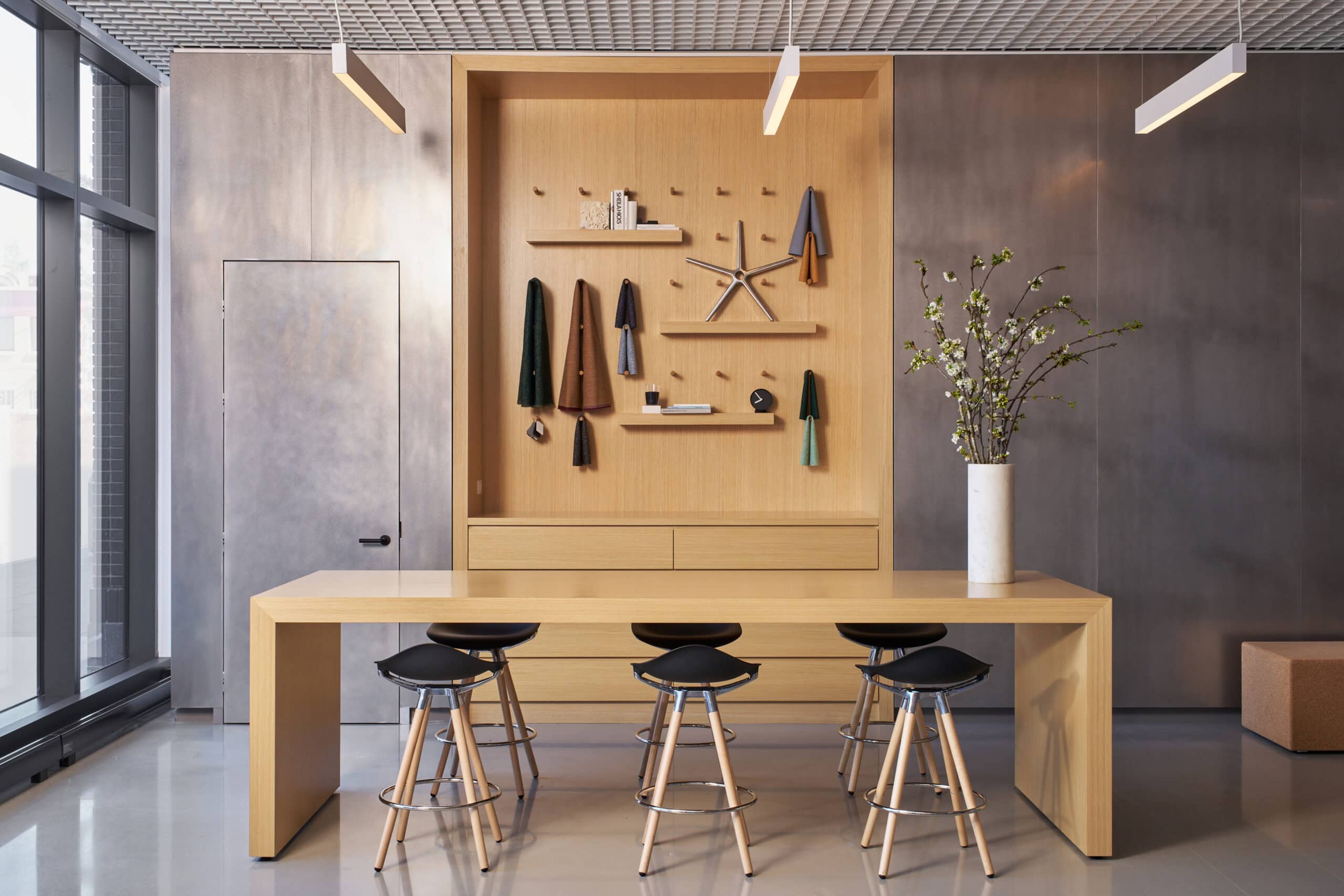
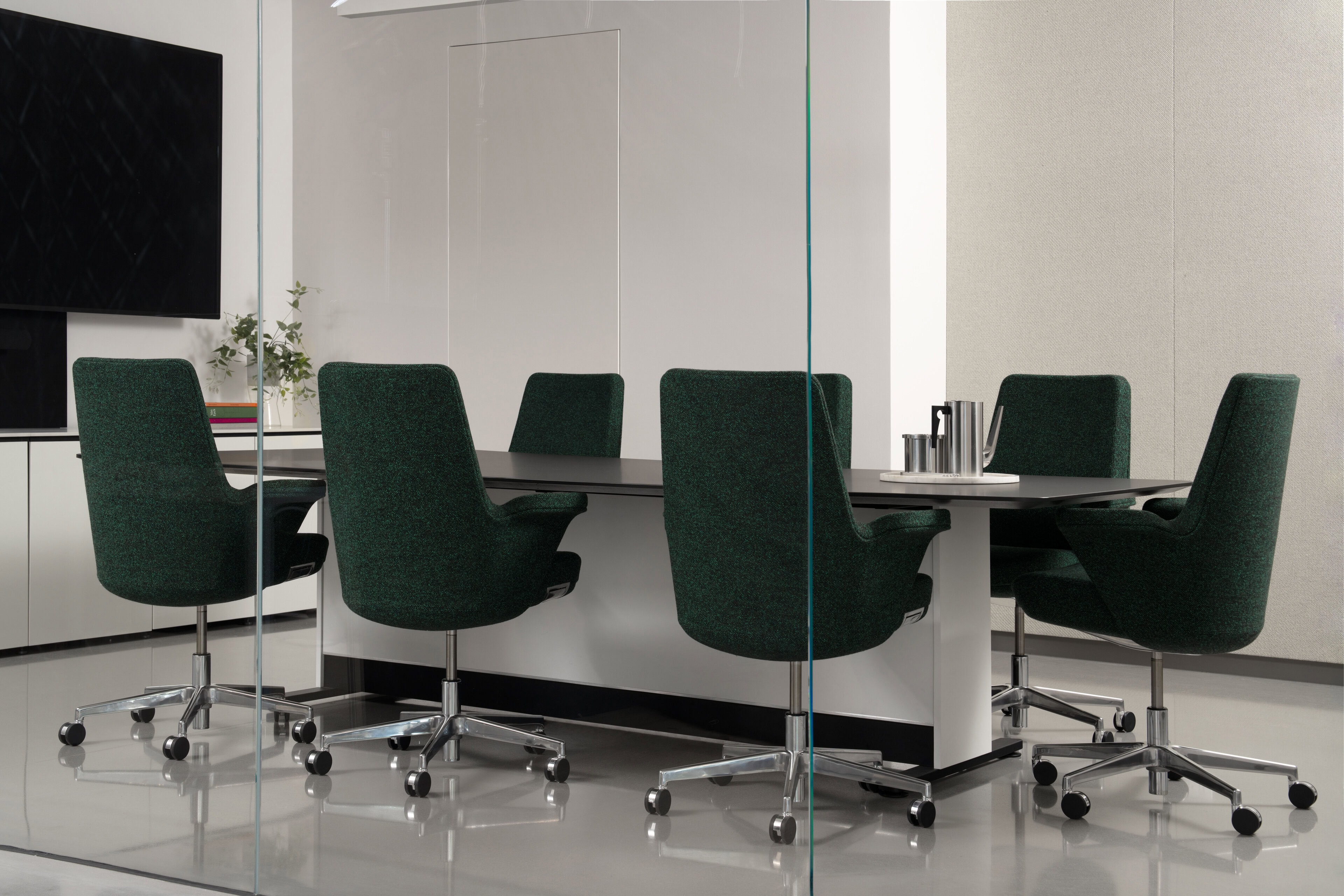
The project features a large open showroom lined with large, full-height windows. The space includes a conference room for meetings, phone room, restroom, kitchenette, and storage room. All interior finishes and building energy systems were new, including a new concrete floor slab. The space was meant to be flexible, with large open volumes, interior glazed partitions for enhanced views, and modular curtains to open or enclose the space as needed.
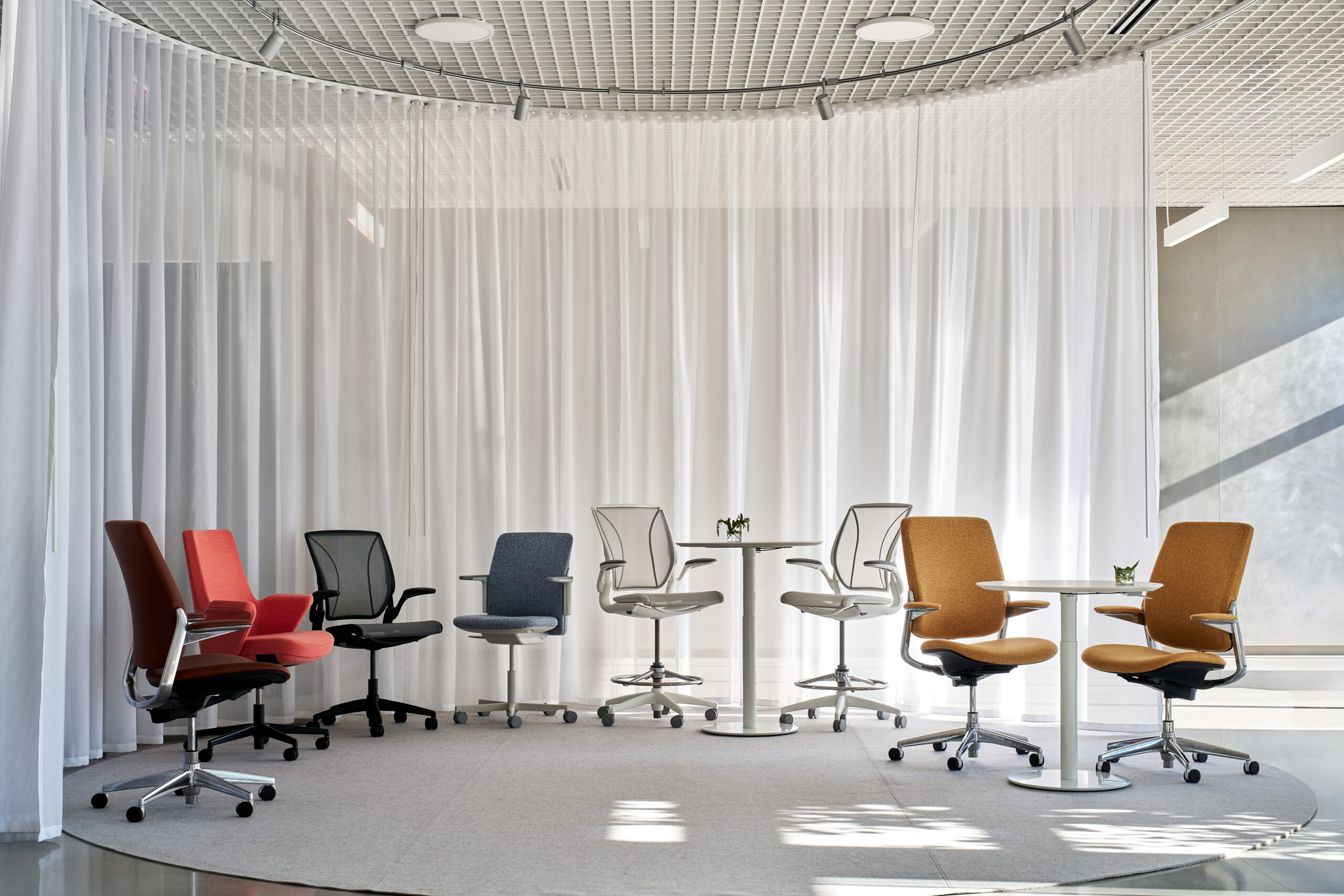
Material Vetting Process
Humanscale chose to participate in the Design for Freedom Pilot Program after construction commencement. The construction documents were completed and a majority of material finishes were finalized. Material selection followed the Living Building Challenge, the most rigorous material goals on the market today. Materials were selected for transparent ingredient reports, avoidance of prohibited contaminants called Red List ingredients, low-VOC emissions, local manufacturer, and reduced embodied carbon in manufacturing. To begin the Design for Freedom research initiative, The Sheward Partnership and a Humanscale intern identified 16 leading manufacturers from the over 200 materials specified on the project. The 16 potential manufacturers were selected based on the following criteria:
- Published an annual corporate social responsibility report each year that mentions responsible labor practices within their organization and their supply chain.
- A Declare label or Living Product label that demonstrates increased contact and negotiation with supply chain around material ingredients, which creates a foundation for human rights conversations.
The team contacted the sustainability lead identified on the Health Product Declaration or reached out to the local sales representative. It was difficult to find the “right person” to answer these difficult labor questions and often we were forwarded to the manufacturer’s legal department. Overall, manufacturers were excited to learn more about the Design for Freedom program and eager to participate. The team held calls with each manufacturer to discuss required documentation and timeline. Manufacturers quickly filled out the Design for Freedom Questionnaire, which is similar to questions that would be asked on a request for proposal (RFP). The next step was to collect provenance documentation, such as raw material extraction locations, list of suppliers, receipts, and written statements and/or certifications indicating responsible labor practices. Some manufacturers were unwilling to share comprehensive information due to concerns about proprietary information, trade secret, and intellectual property. This roadblock points to a larger issue of understanding how information can be shared freely so specifiers can make informed decisions but recognizing the challenges and complexity of a global supply chain.
Participating manufacturers shared a variety of the following documents:
- Statements confirming no forced and child labor within the organization
- Business ethics policy governing employee and business activities
- Supplier code of conduct requiring responsible labor practices of vendors
The Sheward Partnership found some historic information available from a LEED version 4 credit that required corporate social responsibility reporting and list of raw material extraction locations. Interestingly, the LEED version 4 credit was released in 2013, but was abandoned in later versions of the LEED Rating System due to market push back. This topic has been circling the industry for many years and requires additional engagement to push the industry forward.
This project also struggled with substitutions, where one material is specified but the General Contractor submits and installs an alternate material. The team held an education session with stakeholders, including the General Contractor, to explain the Living Building Challenge and Design for Freedom programs. We recognize and recommend pre-construction meetings with subcontractors on future projects to explain the granularity of the material specifications and the importance of using these particular manufacturers. In two instances, The Sheward Partnership had to pivot away from a manufacturer who was willing to participate in the Design for Freedom Pilot program because the product was no longer being used on the project.
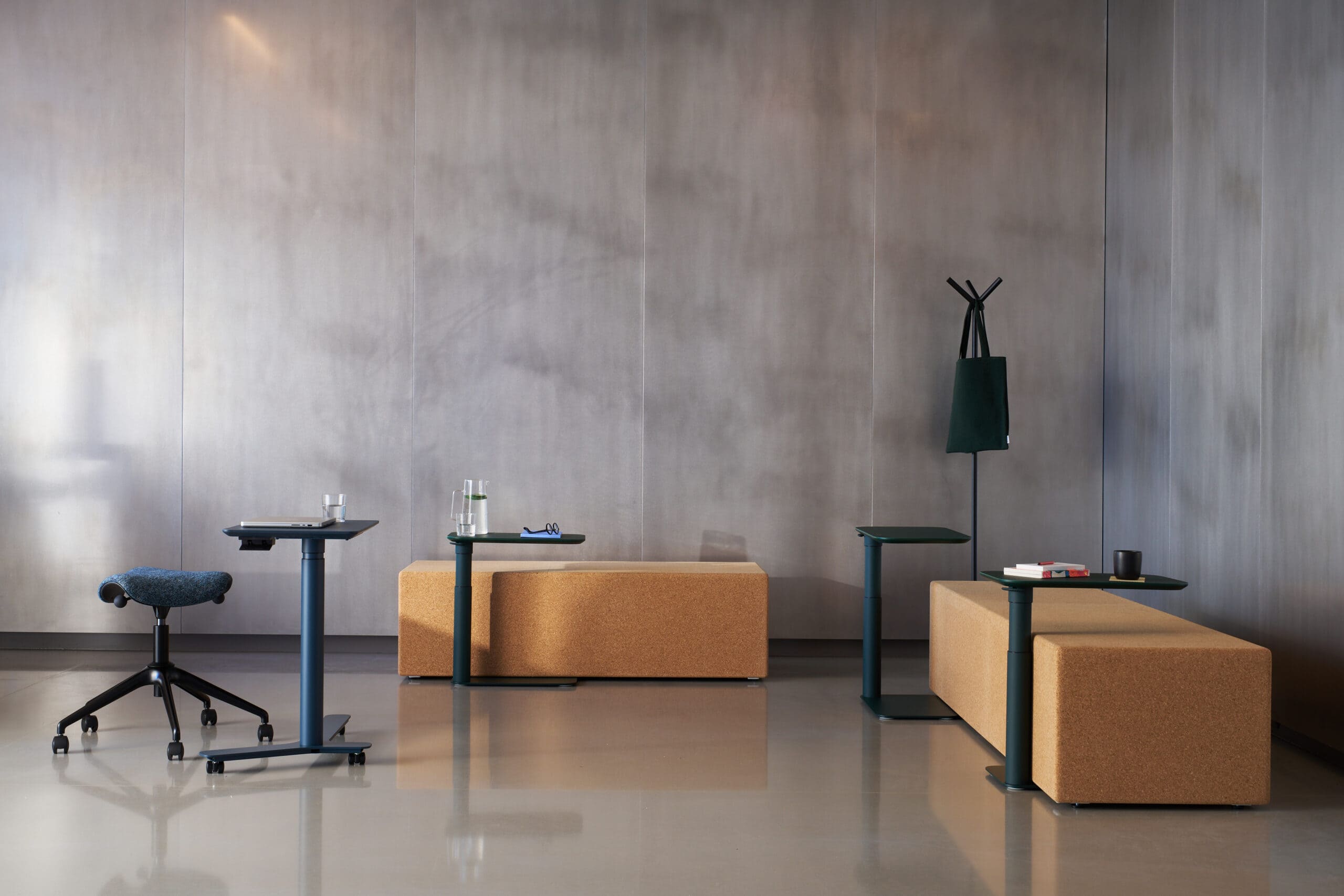
Material Selection
Included below are the five manufacturers that participated in the program. These products also contributed to the Living Building Challenge Materials calculations in various capacities.
- Crossville Porcelain Tile
- Kvadrat Curtain Fabric
- MillerKnoll-Fitzfelt Wool Rugs
- Formica Laminate
- Humanscale M10 Monitor Arm
Humanscale’s Participation
Humanscale chose to participate in the program, receiving the Design for Freedom Pilot Program participation request as any other client interaction. Humanscale selected the M10 Monitor Arm as a first step in understanding the process. M10 is a Living Product, Declare labeled, meets low-VOC emissions, and is finally assembled in Nogales, Mexico or Dublin, Ireland. In total, the monitor arm is made up of over 80 individual pieces, including iron, aluminum, steel, plastics, and foams. Humanscale provided their corporate social responsibility report which details their commitment to ethical labor practices in their facilities and expectations of their suppliers. Humanscale provided a copy of their Supplier Code of Conduct, a contractual agreement requiring suppliers to sign off on various environmental and human rights policies, including forced and child labor. Next, Humanscale provided documentation from the supplier who provides the various M10 monitor arm components, whom we will call Supplier F. Supplier F provided their organizational statement prohibiting child and forced labor and their supplier code of conduct that is administered to their suppliers requiring responsible child and forced labor practices. Supplier F provided raw material extraction locations, including name and location of mines for metals. Elements in metal alloys were extracted in Asia. Raw materials for plastic were sourced from oil and natural gas originating from Asia, Middle East, and South America.
To summarize:
- One monitor arm in Chicago, Illinois
- Final assembly in Nogales, Mexico or Dublin, Ireland
- One Supplier F (China)
- 80 individual components: Iron, aluminum, steel, ABS, foam, nylon, acetal resin, zinc
- Metal alloy raw materials extraction locations: China
- Plastic made from oil and natural gas extracted from: China, Middle East, and South America
Next Steps
Humanscale began responsible and ethical conversations with their supply chain in 2010 in pursuit of Level certification, a recognition program for sustainable furniture manufacturing. While there continue to be more sustainable labels and programs across the marketplace, these programs can be leveraged to achieve client corporate social responsibility goals, increase education and awareness, and promote investment in change. This also points to the time it takes to complete meaningful research and investigation into sustainable materials and supply chains, all of which may change over time. A 2024 report from ThinkLab confirmed architects and designers have 40 times the buying power of the average consumer. While at the top 200 firms, architects and engineers experience 140 the spending power of the average consumer. Similarly, architects and designers with professional designations agree to a professional code of conduct, accepting a professional duty to protect and safeguard the public. We publish this case study to share the successes and lessons learned from this process, inspire dialogue, and inform others. We endeavor others to evaluate their material selection process, ask tough questions of their sales representatives, and leverage existing tools, frameworks, and databases to find the most sustainable materials best suited for a given job.
Project Team
Owner: Humanscale
Design Architect: Reddymade
Architect of Record: bkl Architecture
Structural Engineer: WSP
MEP Engineer: Interface Engineering, Inc.
General Contractor: CDI Construction Group, Inc.
Sustainability Consultant: The Sheward Partnership, LLC
Photo Credit: Humanscale